

Abodi (Beef Reed): The Complete Guide for Cooks, Stores and Wholesalers
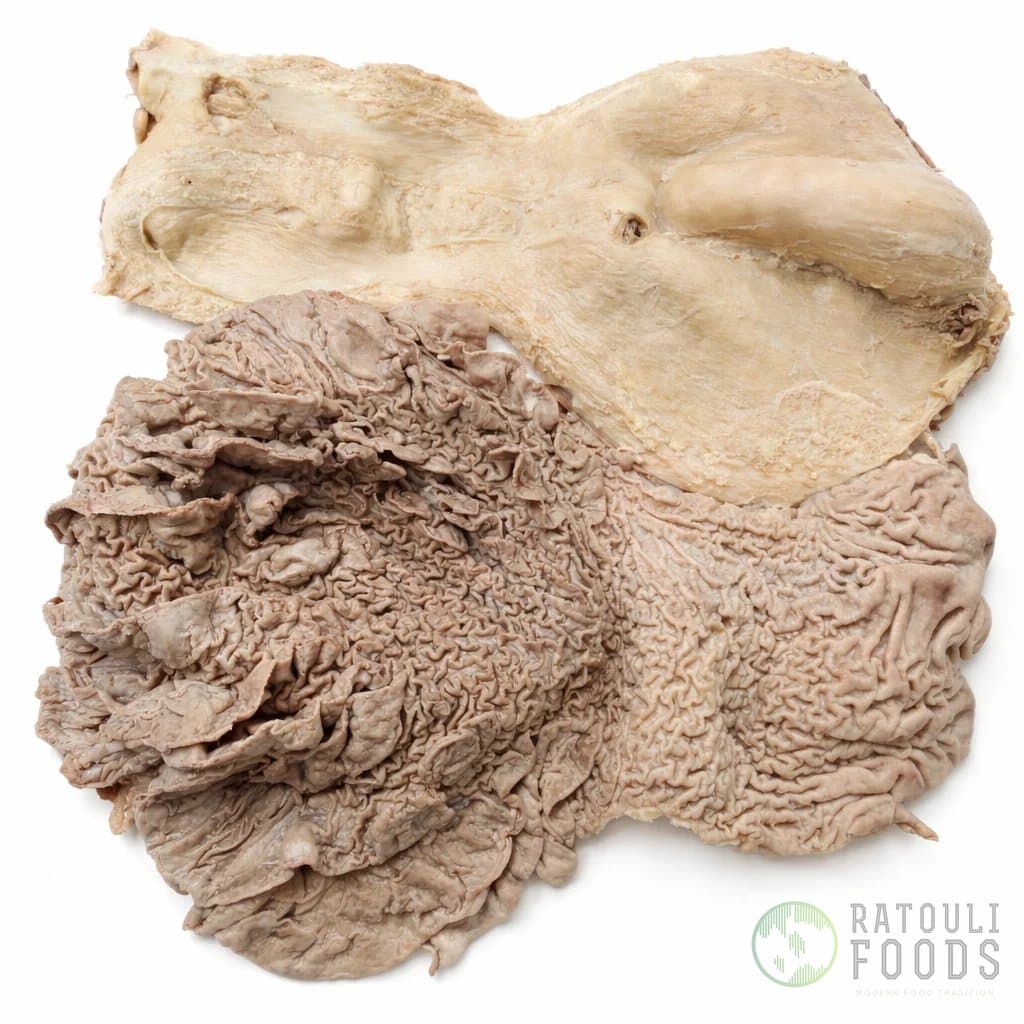
Abodi is beef reed, the cow's fourth and final stomach chamber, known in anatomy as the abomasum. It is the only chamber that works like a human stomach, with acid and enzymes. The chew is smoother than shaki and it takes pepper and spice very well. This guide covers it for cooks, stores and wholesalers.
What abodi actually is
Abodi is the abomasum. That is the cow's fourth and final stomach chamber, and in the trade you will hear it called beef reed. A cow has one stomach split into four compartments, and the abomasum sits at the end of the line. It is the only one of the four that works the way a human stomach works. Hydrochloric acid, and the enzymes pepsin and rennin, do the digesting. That is why it gets called the true stomach, the glandular stomach, the rennet stomach. Same organ, different names.
So when someone asks what abodi is, here is the honest one-liner. Abodi meat is the cooked and cleaned beef reed, the abomasum, sold frozen for soups, stews and assorted-meat pots. It is a tripe, but not the tripe most people picture. The chew is smoother than the honeycomb most cooks know. It holds pepper and spice the way few cuts do, which is why it earns a spot in a pepper soup instead of disappearing into it.
We sell it under the name abodi because that is what our buyers in the Nigerian, Ghanaian and wider West-African diaspora call it. Yoruba, Igbo and Hausa kitchens all know the word. In search you will see it spelled abody, abudi or abuddi. Same product. For trade and labelling the correct spelling is abodi.
Abodi by another name
This is the part that trips up new buyers. The same organ carries a different name in almost every kitchen and every language it passes through. None of them are wrong. They are local. Here is the map, with the EU-language anchors that matter when you source or sell across the continent.
| Culture or language | Name for the abomasum |
|---|---|
| Yoruba / Igbo / Hausa (West Africa) | Abodi |
| English trade | Beef reed, reed tripe, reed crown, cow reed, cow stomach, maw, rennet-bag |
| Dutch | Lebmaag (loosely rundermaag, pens) |
| French | Caillette (from caillé, curdled) |
| German | Labmagen, also called Käsemagen, the cheese stomach |
| Italian | Abomaso, and as a dish, lampredotto |
| Spanish | Cuajar or abomaso (and in dishes, callos, mondongo) |
| Portuguese | Coalheira, coagulador, abomaso |
Look at the European names and a pattern shows up. Caillette, Labmagen, cuajar, coalheira all point back to curdling and rennet. The French caillette comes from caillé, curdled. The German calls it the cheese stomach outright. That is no accident, and it tells you a lot about what this organ does. More on that below.
The four stomach chambers and their tripe types
To place abodi right, you need the whole cow stomach. One stomach, four chambers, and each chamber gives a different tripe. People mix these up constantly, so here is the clean version.
| Chamber | Tripe type | Diaspora name |
|---|---|---|
| Rumen (1st) | Blanket / flat / smooth tripe | Flat tripe |
| Reticulum (2nd) | Honeycomb tripe | Shaki |
| Omasum (3rd) | Book / bible / leaf / manyplies tripe | Book tripe |
| Abomasum (4th) | Reed tripe | Abodi |
Read that table once and the confusion clears. Shaki is the honeycomb from the second chamber, the reticulum. Abodi is the reed from the fourth chamber, the abomasum. Two different parts of the same stomach, and they cook and eat differently. If you run a store, keep this table behind the counter. Customers ask, and a wrong answer sends them home with the wrong bag.
One more thing to keep straight, because it gets merged all the time. Ponmo, also spelled kpomo, is cow skin. It is not tripe at all. Roundabout is the small intestine. Neither of those is abodi or shaki. Four chambers, four tripes, and skin and intestine sitting outside the stomach entirely.
The honest naming note
I have sold this product for years, and I will tell you plainly. The diaspora trade does not label it consistently. Walk through five African shops in three countries and you will see the same frozen reed sold as beef reed, reed crown, cow stomach, and sometimes loosely as beef intestine reeds, which is not even the right organ. Some packs are just mislabelled. That is the reality, not a knock on anyone.
So here is the definition we put on our packs and stand behind. Abodi is the abomasum, the fourth stomach chamber, sold as beef reed. The cut rolled into a ring is called the reed crown, but it is still the same abomasum. If a label says cow stomach, ask which chamber. If it says beef intestine, it is probably not reed at all. Buy from us and you get the abomasum, cleaned and cut, with the name matching the meat.
I spell this out because clarity is worth money in this trade. A store that knows exactly what is in the bag can answer the customer, price it right, and reorder with confidence. A store that does not know ends up with returns and confused buyers. The labels in the wider market vary. The definition does not.
Abodi vs shaki
This is the comparison people search for most, so let me be exact. Both are tripe. Both come from the cow's stomach. They are not the same cut and they do not behave the same in the pot.
- Abodi is reed tripe from the abomasum, the fourth chamber. Smoother surface, smoother chew. It softens to a clean bite and carries pepper and spice into the meat, not just onto it.
- Shaki is honeycomb tripe from the reticulum, the second chamber. You can see the honeycomb pattern. It has a chewier, springier bite that a lot of cooks specifically want, and it holds up to long cooking.
In a mixed pot you can use both, and many cooks do. Abodi gives you the smoother, peppery pieces. Shaki gives you the chew. Neither is better. They are different textures doing different jobs, and a good assorted pot often carries both. If shaki is what you are after, we run a full shaki range and a separate guide for it. For the smoother reed, abodi is the one.
The lampredotto and rennet heritage
Here is the part that should change how you think about this cut. The abomasum is not scrap. In Florence it is street food people queue for. The Italian lampredotto is the abomasum, simmered slow in broth with herbs, then chopped and piled into a bread roll dipped in the cooking liquid. It is one of the city's signature sandwiches and a proud piece of the quinto quarto, the fifth quarter, which is the Florentine name for offal. Butchers there split lampredotto into two parts. The gala is the lower section, layered and bolder in flavour. The spannocchia is the upper section, fattier and milder. That is a kitchen taking the fourth stomach seriously enough to name its halves.
Then there is the rennet. The abomasum is where rennet comes from, the enzyme chymosin that curdles milk into curds for cheese. People have used it that way for thousands of years. That is the whole reason this chamber is called the true stomach or the cheese stomach, and why the French, German, Spanish and Portuguese names all circle back to curdling. So abodi sits inside a long, global story. West Africa puts it in pepper soup. Florence puts it in a bun. Cheesemakers have leaned on it since before written records. Same organ, respected on three counts.
The dishes abodi carries
Abodi earns its keep in the pots where texture and pepper matter. It is not a background ingredient. These are the dishes our buyers cook with it most.
- Pepper soup. The classic home for reed. The smooth chew and the way it takes pepper make it a natural in a hot, clear, peppery broth.
- Assorted meat, the Yoruba orisirisi. The mixed offal pot where abodi sits alongside shaki, skin and other cuts. This is the big-demand dish, and abodi is one of the pieces people look for.
- Egusi. The melon-seed stew. Abodi adds body and a different bite to the meat side.
- Igbo nkwobi. Spiced offal in a thick, palm-oil and ehu seasoned sauce. Reed holds the seasoning well here.
- Ofada and ayamase stew. The green-pepper assorted stew served with ofada rice. Abodi is a regular in the meat mix.
One rule for the pot. When you cook a mixed-offal dish, the tougher pieces go in first. Abodi and the chewier cuts get a head start so everything finishes tender at the same time. Drop the quicker meats in later. Demand for assorted meat spikes around the New Yam Festival in August, around Eid, and through December, so cooks and stores planning those periods should buy ahead.
How to clean and cook abodi
The cleaning is the part that scares first-time cooks, and it is the part we take off your plate. The reed we ship is already scalded, cleaned and cut, so the heavy work is done before it reaches you. You still rinse it before cooking. If you start from a raw, uncleaned reed bought elsewhere, you scald it, scrape it, trim it and cut it yourself, which is real time at the sink. Scalded and cut saves you that.
The cooking rule is simple and it does not change. Cook it long and slow. Reed is a working muscle and it needs time to give up its toughness and turn tender. Rush it and it stays rubbery. Here is the basic method.
- Rinse the thawed abodi in cold water.
- Put it in a pot with water, onion, salt and your base seasoning. Bring it up and let it simmer.
- Give it time. Long, gentle cooking is what softens reed to a clean bite. Top up the water if it runs low.
- In a mixed-offal pot, abodi goes in early with the other tough pieces, and the quicker meats follow later so the whole pot finishes together.
- Once it is tender, it goes into your soup or stew to carry the pepper and spice.
That is the whole technique. Long heat, early into the pot, rinsed before it starts. The reed does the rest.
A nutrition snapshot
Abodi sits in the tripe range nutritionally, and I will keep this honest rather than dress it up. For roughly 100 grams of cooked beef reed you are looking at about 85 to 95 kcal. That is lean for a meat product. The protein runs around 18 to 20 grams and it is complete protein, with a high share of collagen, which is part of why long cooking turns it tender and gives soups their body.
- About 85 to 95 kcal per 100 grams cooked.
- Around 18 to 20 grams of complete protein, high in collagen.
- Over 100% of the daily value for vitamin B12.
- Meaningful selenium and zinc.
- Lower fat than most beef cuts.
- About 178 mg of cholesterol per 5 oz serving, which is worth knowing if you watch that.
No health claims beyond what the numbers say. It is a lean, high-protein offal with strong B12, decent minerals, and the collagen that makes a pot of pepper soup feel rich. That is the honest picture.
How to store abodi
Abodi ships frozen and it stays frozen until you cook it. Keep it at -18°C in the freezer and it holds well for months. Treat it like any quality frozen offal. Keep the cold chain unbroken from delivery to freezer, and do not let it sit out warming up before it goes in.
Thaw it in the fridge overnight, or under cold running water if you need it the same day. Once it is fully thawed, cook it. Do not refreeze raw reed that has thawed. Each freeze-thaw cycle costs you texture and is poor food-safety practice. For a store, that means rotating stock first-in first-out and holding the freezer at a steady -18°C so what you sell keeps the quality you paid for. Cooked abodi keeps a few days in the fridge in a covered container, so you can cook a batch and use it across several pots through the week.
Wholesale and sourcing from Ratouli Foods
This is the trader's section. We are Ratouli Foods, a B2B West-African and Surinamese food wholesaler based in Volendam, the Netherlands, fourteen years in the trade. We carry abodi as a core line alongside our full shaki range.
Our abodi comes scalded, cleaned, cut and frozen, so your kitchen or your shelf gets a product that is ready to rinse and cook. Pack sizes are 12 x 1 kg cases and 24 x 500 gram cases, which covers the restaurant buying in bulk and the store that wants smaller retail-friendly units. Everything ships frozen at -18°C.
- Approval and compliance. EU approval number NL208262EG, HACCP-controlled, with a public NVWA inspection record you can check.
- Delivery. DAP across the Netherlands, Belgium, Germany, France, Spain, Italy and the UK. We handle the cold chain to your door.
- Packs. 12 x 1 kg and 24 x 500 gram, frozen, scalded and cut.
- Planning. Demand for assorted meat peaks around the New Yam Festival in August, around Eid and through December. Order ahead of those windows.
Our biggest buyers are the Nigerian and Ghanaian diaspora, plus Surinamese and Caribbean buyers here in the Netherlands, and West-African communities across Germany, France, Italy, Spain and Belgium. If you sell to those kitchens, abodi belongs on your shelf, and shaki right next to it. Get in touch and we will sort your first pallet, with packs, sizes and delivery date included.
Sourcing for your store or wholesale?
Request a quote or browse the full catalogue.